
The Political Intelligence Group (PIG), the analytical arm of Politico.ng, has projected that President Bola Ahmed Tinubu will win 20 states in the 2027 presidential election, while former Vice President Atiku Abubakar is projected to win nine states and Peter Obi eight states.
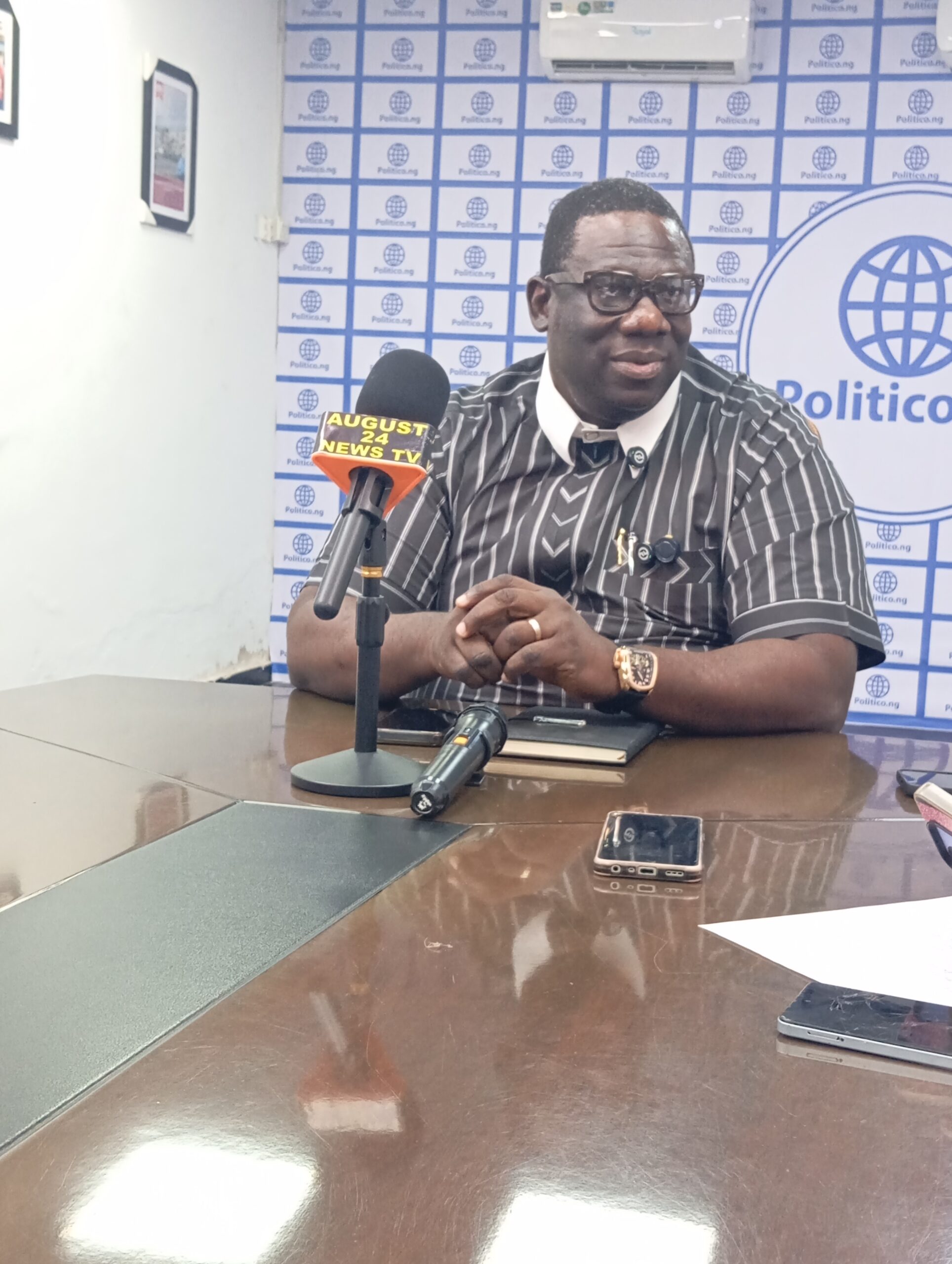
The projection was reaffirmed by the Publisher of Politico.ng, Mr. Lai Omotola, at a press conference held at the organisation’s office in Maryland, Lagos.
Omotola said the projection was based on the group’s assessment of prevailing political factors and should not be regarded as an official election result or a prediction of what the Independent National Electoral Commission (INEC) would declare.
He said PIG’s analysis showed that Tinubu would likely record a stronger performance in the South, while also making a fairly strong showing in the North-West and North-East.
According to the projection, the APC is expected to win in Lagos and Imo State, while also defeating the political influence of former Kano State Governor Rabiu Musa Kwankwaso to win Kano State.
Atiku Abubakar is projected to win nine states, while Peter Obi is expected to secure eight states. The group projected that Obi would win the Federal Capital Territory (FCT), despite the political influence of the Minister of the FCT, Nyesom Wike. “This projection doesn’t suggest a winning or INEC declaration, but what we have painstakingly observed through various factors. We have predicted elections in the past, which we got correctly at 90 percent,” Omotola said.
He described pre-election analysis as a difficult exercise but said it could help political parties and candidates identify their strengths and weaknesses ahead of the election. “Any political party or candidate that doubts our prediction does so at their peril,” he added.
Omotola said the figures represented a “mock result” based on current political realities and the assumption that all things remained equal. “The Political Intelligence Group is known for objective analysis, and we can in all honesty say President Tinubu will win in 20 states of the federation, while Atiku Abubakar will have nine states and Peter Obi will win eight states,” he said.
On Rivers State, Omotola said the contest was too close to call, while arguing that Wike’s political influence could play a major role in determining the outcome in the state and the FCT. “Rivers State is too close to call. For APC to have Rivers State, Wike should talk less, or else both Rivers and FCT might not come his way despite his boasting,” he said.
Omotola identified three major factors he believed would shape the 2027 presidential election: the principle of political rotation, the Northern agenda and voters who are not aligned with either position.
He said the rotational principle could favour Tinubu, while the Northern agenda could strengthen Atiku’s chances and voters outside the two blocs could favour Obi.
“The 2027 will be determined on a tripod of rotational factor, the Northern agenda and those who are not aligned to the above two,” he said. He added that the eventual outcome of the election would have consequences for Nigeria’s political landscape and could shape the narratives and direction of national politics beyond 2027.
Omotola further argued that the APC currently enjoys significant advantages ahead of the election, citing incumbency, federal influence and campaign resources. “The 2027 Presidential Election is an All Progressives Congress election to win as things stand, no matter the situation or happenings in the country,” he said.
He described the APC’s “federal might and war chest” as major factors in the electioneering process, while also arguing that the opposition lacks a political figure with the electoral strength and political machinery that Tinubu brought to the APC in the 2015 election.
According to him, the absence of such a “talisman” remains a major disadvantage for the opposition.
He also ruled out the possibility of the opposition parties successfully coming together at this stage of the political cycle. “There is no way the opposition could come together at this time,” Omotola said.
The projection is expected to generate further debate among political parties, analysts and other stakeholders as preparations for the 2027 presidential election intensify.